
Drag Coefficients Explained: How They Affect Car Performance
When people talk about what makes a car fast, they often focus on horsepower, torque, or engine technology. But there’s another key factor that plays a huge role in performance, the drag coefficient. It’s not as flashy as an engine upgrade, but it can determine how fast a car can go, how stable it feels at speed, and even how much energy or fuel it consumes.
So, what exactly is a drag coefficient, and why do car manufacturers spend millions trying to reduce it? Let’s break it down in the simplest way.
What is Aerodynamic Drag?
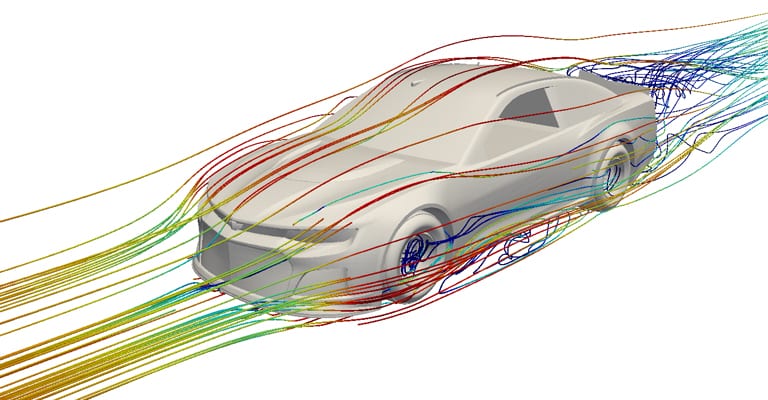
As a car moves forward, it has to push through air. The air pushes back, this resistance is called aerodynamic drag. The faster the car moves, the higher this drag becomes.
In fact, drag increases with the square of speed:
- If you double your speed, drag doesn’t just double, it becomes four times higher
- That’s why cars consume much more fuel or battery at high speeds
Aerodynamics is the science of reducing drag to help a car move smoothly through the air.
What is the Drag Coefficient (Cd)?
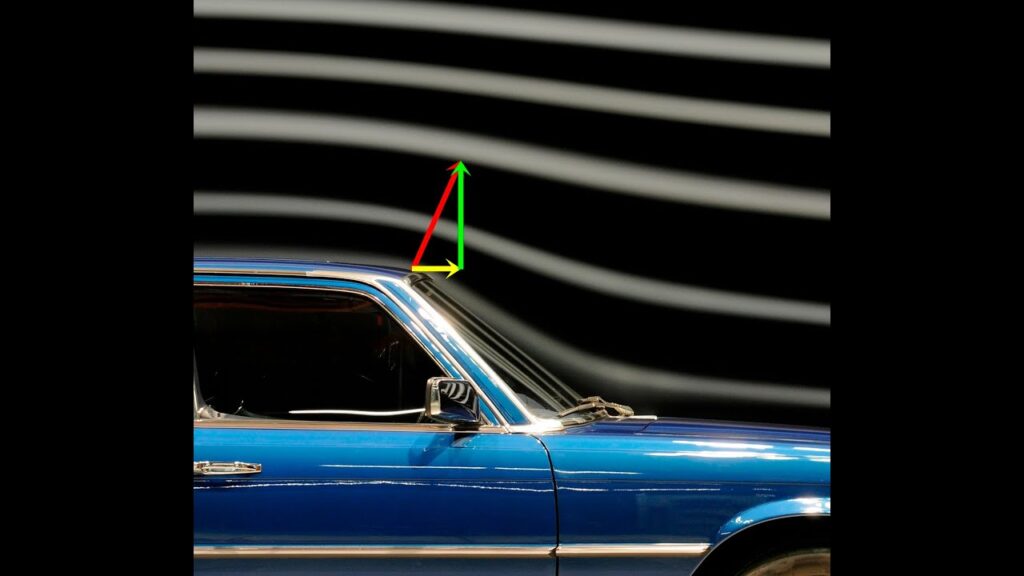
The drag coefficient (Cd) is a number that measures how easily a car slices through the air. Lower numbers mean the vehicle is more aerodynamic.
Here’s a simple way to understand Cd:
| Drag Coefficient | Category | Meaning |
| 0.20 – 0.25 | Excellent | Very aerodynamic, usually EVs or sports cars |
| 0.26 – 0.30 | Good | Modern sedans & SUVs |
| 0.31 – 0.35 | Average | Older models or boxy vehicles |
| 0.40+ | Poor | Trucks & off-road vehicles |
A perfectly aerodynamic object, like a teardrop, can have a Cd near 0.05. A flat wall facing the wind would have a Cd close to 1.0.
Most cars today aim for a Cd around 0.26 – 0.29.
Drag Force is Not Just About Cd
The total drag acting on a vehicle depends on:
Drag Force = Cd × Frontal Area × Air Density × Speed² / 2
This means two things matter:
1. The shape of the car (Cd)
2. The size of the car (frontal area)
Example:
- A sports car is low, small, and smooth → lower drag
- An SUV is tall and flat → more drag, even if its Cd is good
That’s why SUVs generally consume more fuel than sedans.
How Drag Coefficient Affects Car Performance
Here is what you need to know.
1. Top Speed
Drag pulls the car backward. The engine (or motor) must fight that force.
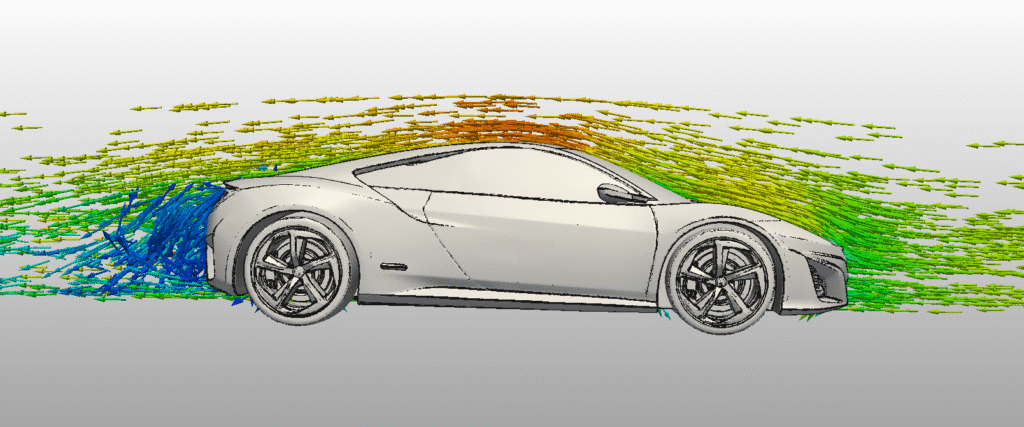
At very high speeds, drag becomes the biggest barrier to acceleration, not power. Cars with better aerodynamics achieve higher top speeds using less power.
Example:
- A car with Cd 0.22 may reach 250 km/h with 300 hp
- A similar car with Cd 0.33 may need 450 hp for the same speed
This is why supercars look sleek, every curve matters.
2. Fuel Efficiency and EV Range
Drag is the biggest energy consumer on highways.
For petrol cars:
- Higher drag → more fuel burned
For EVs:
- Higher drag → faster battery drain → shorter range
This is why EV manufacturers prioritize aerodynamics so heavily — every drop of energy matters.
Example:
Tesla reduced the Model S drag coefficient to 0.208, giving it:
- Longer driving range
- Better high-speed efficiency
3. Handling and Stability
Good aerodynamics keeps the car pressing against the road (downforce), improving:
- Grip in corners
- Stability during lane changes
- Control at high speed
A car with poor aerodynamics may feel:
- Light at the front
- Wobbly in crosswinds
Modern cars use:
- Spoilers
- Diffusers
- Air dams
- Underbody panels
These parts help manage airflow to keep the vehicle planted.
4. Noise and Comfort
Air hitting the body creates wind noise.
More drag = louder cabin
A streamlined car:
- Feels quieter
- Has less turbulence
- Feels more premium at motorway speeds
Automakers now test vehicles in advanced wind tunnels to fine-tune comfort, not just performance.
Design Features That Reduce Drag
Every design detail plays a part:
| Feature | Benefit |
| Smooth front bumper | Reduces pressure buildup |
| Rounded body edges | Reduces turbulence |
| Sealed underbody | Prevents drag underneath |
| Smaller grille | Less air resistance |
| Hidden door handles | Cleaner airflow |
| Active shutters | Open only for cooling needs |
| Aero wheels | Reduce air swirl |
That’s why EVs often have:
- Minimal grilles
- Smoother body panels
- Wheel designs optimized for airflow
Examples of Drag Coefficients in Real Cars
| Car Model | Drag Coefficient |
| Tesla Model S | ~0.208 |
| Mercedes EQS | ~0.20 |
| Toyota Prius | ~0.24 |
| Porsche Taycan | ~0.22 |
| Honda Civic | ~0.28 |
| Ford F-150 Truck | ~0.44 |
Notice how EVs dominate the lowest drag numbers, it’s essential for range.
Why Doesn’t Every Car Have a Low Drag Coefficient?
You may think every car should look like a teardrop, but design doesn’t work that way.
Manufacturers must balance:
- Style
- Interior space
- Cooling requirements
- Off-road ability
- Safety standards
- Brand identity
Example:
- SUVs need ground clearance → more drag
- Sports cars need big intakes for cooling → sometimes increases drag
So engineers find the best possible compromise.
Drag Coefficient in the UAE, Why It Matters
Drivers in the UAE spend a lot of time:
- On high-speed highways
- Driving long distances between Emirates
- Dealing with headwinds and sand resistance
A lower drag coefficient benefits UAE drivers by:
✔ Improving fuel economy at high speeds
✔ Increasing EV range between charging points
✔ Providing better stability in strong desert winds
With rising interest in EVs here, aerodynamics is becoming even more important.
How Can Drivers Improve Aerodynamics?
Some small habits can reduce drag:
- Keep windows closed at high speeds
- Remove roof racks when not needed
- Keep tires properly inflated (less rolling resistance)
- Avoid unnecessary external mods like wide mud flaps
Even the way you drive matters, smoother acceleration reduces turbulence.
A Quick Summary
| Feature | Petrol Cars | Hybrids | EVs |
| Speed Efficiency | Good but impacted by drag | Better aerodynamics | Highest priority |
| Fuel/Battery Impact | Higher fuel at high speed | Improved efficiency | Drag deeply affects range |
| Usage in UAE | Common on highways | Efficient in traffic | Expanding rapidly |
But the key takeaway:
A car with good aerodynamics performs better, uses less energy, and stays more stable on the road, especially at high speeds.
Final Thoughts
The drag coefficient may seem like a technical number, but it affects your driving every day, your car’s speed, comfort, efficiency, and safety.
As the automotive industry shifts toward clean energy and smarter mobility, aerodynamics will play an even bigger role. From luxury EVs to everyday family cars, the focus is clear:
sleeker shapes, lower drag, and better performance.
So next time you check a car’s specs sheet, don’t just look at horsepower, pay attention to that Cd number too. It might be the secret to a smoother, faster, and more efficient drive on UAE roads.