
Mastering Cruise Control: How to Use It Safely
Ever wish your car could handle the speed for you while you simply steer and enjoy the ride? That’s exactly what cruise control does, and when used correctly, it can transform long drives into smooth, efficient journeys. Whether you’re cruising down Sheikh Zayed Road or heading out for a weekend escape beyond the city, understanding how to use cruise control safely can make every drive more relaxed and fuel-efficient.
Let’s dive deep into how this modern driving feature works, when to use it, and how to get the most from it without compromising safety.
What Is Cruise Control and How Does It Work?
Cruise control is a smart system that lets your car maintain a steady speed without needing to press the accelerator pedal. Once activated, it automatically controls the throttle, helping you stay at a chosen speed ideal for highways or long, open roads.
There are two main types of cruise control systems:
Traditional Cruise Control
The driver sets a fixed speed, and the system maintains it until you tap the brake or turn it off.
Adaptive Cruise Control (ACC)
This advanced version uses radar and cameras to monitor the traffic ahead, automatically slowing down or speeding up to keep a safe distance.
Modern vehicles, especially luxury brands like Tesla, BMW, and Mercedes-Benz, integrate adaptive systems that even respond to stop-and-go traffic, a step toward semi-autonomous driving.
Why You Should Use Cruise Control
Cruise control isn’t just about comfort, it’s a combination of efficiency, safety, and convenience. Here are the top benefits:
1. Reduced Fatigue
Keeping your foot on the accelerator for hours can cause leg fatigue, especially on long highway drives. Cruise control eliminates that strain, letting you relax and focus on the road ahead.
2. Better Fuel Economy
By maintaining a consistent speed, your car uses fuel more efficiently. This means fewer unnecessary accelerations and better mileage over time.
3. Speed Consistency
It helps you stay within speed limits and avoid unintentional speeding, especially on long straight roads where it’s easy to lose track of your speed.
4. Smoother Ride
No more jerky starts or stops just steady, predictable motion. That’s especially useful on long trips through the UAE or GCC highways, where you can drive for kilometers without major slowdowns.
When You Should Use Cruise Control
Cruise control is best for steady, open-road conditions. Here’s when to switch it on:
- On highways or expressways with minimal stops.
- During long-distance travel where maintaining one speed makes sense.
- In clear weather with dry roads and good visibility.
- When traffic flow is stable not too fast, not too congested.
Example: Using cruise control while driving from Dubai to Abu Dhabi can make the two-hour trip feel far less tiring and more efficient.
When You Should Avoid Using Cruise Control
As convenient as it is, cruise control isn’t suitable for every driving condition. You should avoid using it in the following situations:
Wet or slippery roads: Rain, sand, or oil spills can reduce traction, increasing the risk of skidding.
Heavy traffic: Frequent speed changes make it impractical.
Hilly or winding roads: Cruise control can’t always respond properly to steep inclines or tight curves.
Fatigue: Relying on automation when you’re tired can reduce alertness and reaction time.
Remember cruise control is a driver aid, not a substitute for attention. Always stay ready to brake or steer manually if needed.
How to Use Cruise Control Safely: A Step-by-Step Guide
If you’ve never used cruise control before, don’t worry, it’s easier than it sounds. Follow these steps:
1. Accelerate to your desired speed.
Typically, cruise control works best between 60–120 km/h.
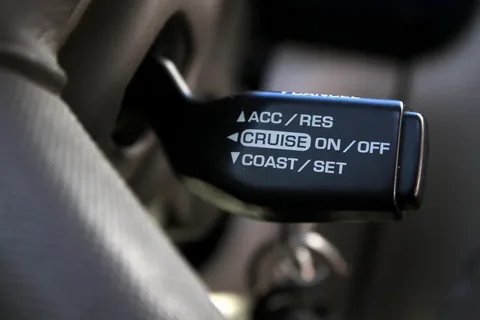
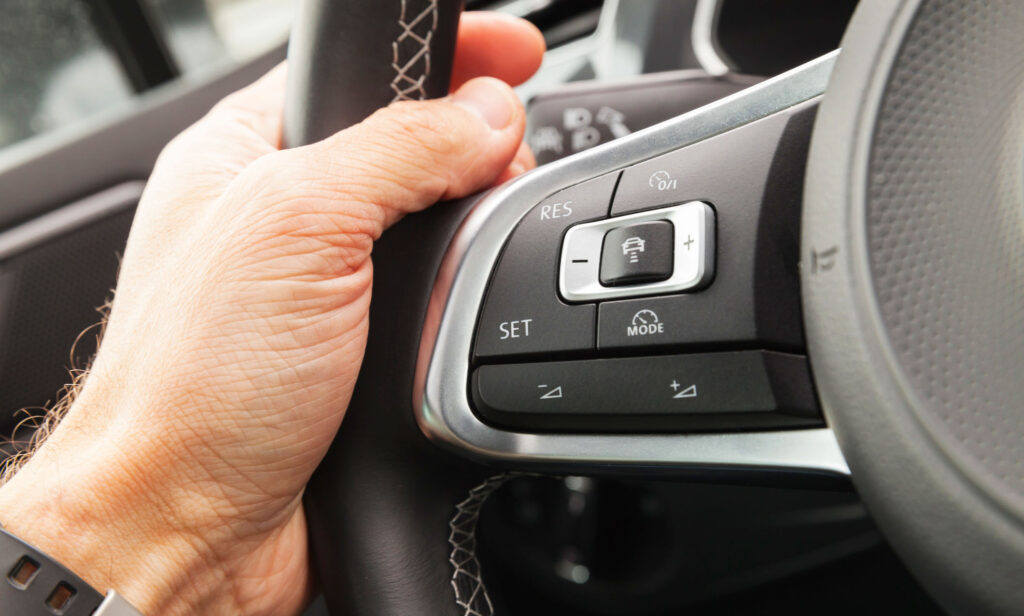
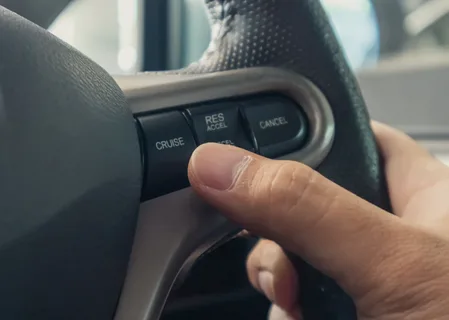
2. Activate the cruise control system.
Locate the control button often on your steering wheel or stalk near the indicators.
3. Set your cruising speed.
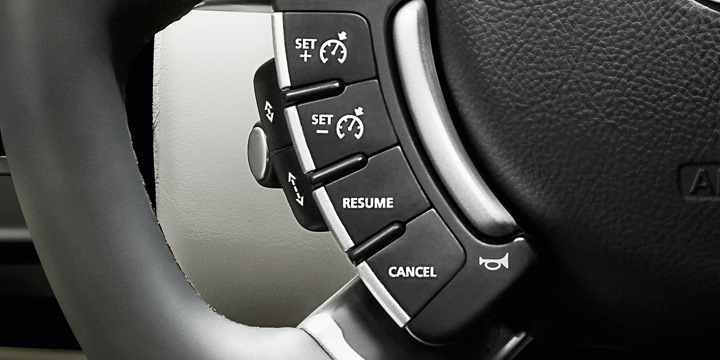
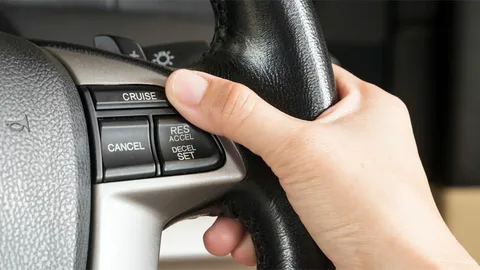
Once you’re at the right speed, press the “SET” button. Your car will maintain this pace automatically.
4. Adjust as needed.
Use the “+” or “–” buttons to slightly increase or decrease speed without using the pedal.
5. Deactivate safely.
Tap the brake pedal or press “CANCEL” to turn off cruise control instantly.
6. Resume if needed.
Many systems include a “RESUME” function to return to your last set speed perfect after slowing down briefly.
If you’re driving a Tesla or another vehicle with adaptive cruise control, you can also set your preferred following distance to the car ahead, a helpful feature in light to moderate traffic.
Pro Tips for Using Cruise Control Effectively
Once you’re comfortable with the basics, here are some expert tips to make the most of this feature:
- Pair cruise control with lane assist on long drives for smoother vehicle control.
- Use adaptive cruise in moderate traffic it automatically adjusts to slowdowns.
- Set a moderate speed (90–110 km/h) for the best fuel efficiency.
- Keep your hands on the wheel. Automation doesn’t mean you can disengage from driving.
- Check your system regularly. Make sure sensors and radar units are clean and functioning properly.
If you’re renting a luxury car in Dubai or elsewhere in the GCC, always ask the rental expert to walk you through its cruise or autopilot system before hitting the road.
Common Mistakes Drivers Make with Cruise Control
Even experienced drivers can misuse cruise control. Here’s what to avoid:
- Using it in city traffic. Stop-and-go driving defeats the purpose.
- Ignoring road conditions. Never activate it on slippery roads.
- Relying too much on automation. Always stay alert for sudden hazards.
- Not deactivating during rain. Wet roads reduce traction.
- Forgetting to reset after restart. Each trip requires reactivation.
Avoiding these mistakes helps ensure a safer and more controlled driving experience.
Cruise Control and the Future of Driving
Cruise control started as a convenience feature in the 1950s but today, it’s a key component of modern driver-assistance systems.
The evolution from simple throttle control to adaptive cruise control (ACC) has laid the foundation for autonomous driving. Cars like Tesla, BMW, and Mercedes-Benz now combine ACC with lane centering, emergency braking, and smart navigation.
In the GCC, where highways are long and driving distances are significant, adaptive cruise control is quickly becoming a must-have feature offering both comfort and safety.
Conclusion
Cruise control is more than a button, it’s a tool that helps you drive smarter. It enhances comfort, saves fuel, and keeps your speed steady, all while making long trips easier on your mind and body.
But remember: it’s only as good as the driver using it. Stay alert, keep your hands on the wheel, and use it only in safe conditions.
Next time you’re cruising through Dubai, Abu Dhabi, or beyond, let your car share the effort. Use cruise control responsibly and experience the road like never before.